










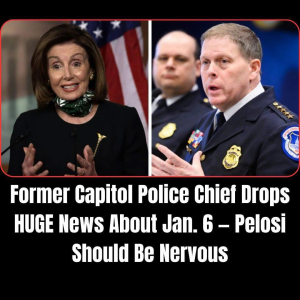
Former U.S. Capitol Police Chief Steven Sund has reignited controversy over the security failures surrounding the January 6, 2021, Capitol attack. In a new public statement, Sund disputes former House Speaker Nancy Pelosi’s version of events, claiming she misrepresented key facts about how security decisions were handled that day. According to Sund, his repeated requests for National Guard support were rejected or delayed by officials under Pelosi’s leadership — decisions that he says left the Capitol vulnerable when rioters stormed the building.
Sund stated that he first requested additional manpower and National Guard support on January 3, three days before the attack, after receiving intelligence suggesting the potential for violence. On the day of the riot, he claims to have asked for National Guard assistance multiple times, but his appeals were denied by the House Sergeant at Arms, who reports directly to the Speaker. Sund argues that these denials caused critical delays in response time, contributing to the chaos that unfolded as protesters breached the Capitol perimeter.
Pelosi has strongly denied any claim that she refused to authorize the National Guard. In recent interviews, she dismissed questions about her role, saying that it was the Trump administration that failed to send troops quickly enough. However, previously released HBO documentary footage filmed by Pelosi’s daughter shows the former Speaker acknowledging that she “takes responsibility” for the security breakdown, saying, “We should have been better prepared.”

The former police chief’s accusations also raise questions about the broader chain of command that governed security decisions on January 6. Sund contends that the system was overly bureaucratic, involving multiple layers of approval from Congress and the Pentagon. Reports indicate that Lt. Gen. Walter Piatt, a Pentagon official, expressed hesitation about deploying the National Guard immediately, citing concerns about the “optics” of having troops surround the Capitol. Sund has called the entire episode an intelligence and coordination failure that could have been prevented with faster decision-making.
Pelosi’s defenders argue that she did not have direct control over security forces and that final decisions rested with the Capitol Police Board and Department of Defense. Nevertheless, Sund’s renewed testimony has added political fuel to ongoing Republican investigations seeking to reassess Pelosi’s leadership during the crisis. His claims have sparked fresh debate in Washington, with critics accusing Pelosi of minimizing her role and others accusing Sund of shifting blame away from law enforcement agencies.
While both sides continue to trade accusations, many details remain unclear. No independent investigation has fully verified Sund’s claims about how many times his requests were blocked or who explicitly denied them. The official record shows that security decisions on January 6 were complex, involving multiple agencies and competing lines of authority. As new congressional hearings and document releases unfold, Americans may finally learn whether Sund’s version of events aligns with the truth — or whether the chaos of that day will remain one of the most hotly contested moments in modern U.S. political history.


 English